
Wagyu vs USDA Prime: How to Choose the Right Kosher Steak

- Wagyu describes cattle genetics, while USDA Prime is a quality grade for beef.
- Both can deliver strong marbling, but Wagyu often brings a richer eating experience that can change how much steak you want on the plate.
- At a kosher steakhouse, cut availability also reflects kosher preparation, dry aging, and the restaurant's specific beef program.
You sit down ready for steak, open the menu, and suddenly there are more decisions than expected.
Ribeye or Delmonico? Angus or Wagyu? What does Prime actually tell you? And does the richest steak automatically make the best order?
The fun part is that each choice can lead to a very different dinner.
At Tabernacle Steakhouse, our dinner menu brings together 45-day dry-aged Angus cuts, Wagyu Strip, Wagyu Delmonico, Wagyu Tomahawk, and a Carnivore Board featuring Prime dry-aged and American Wagyu cuts.
Here is how to understand those labels before you decide what belongs on your table.
WHAT ARE YOU REALLY COMPARING WITH WAGYU AND USDA PRIME?
Wagyu and USDA Prime describe different things.
Wagyu refers to cattle with Wagyu genetics. These cattle are especially known for their ability to develop intramuscular fat, or marbling, which helps create the richness many diners associate with Wagyu.
USDA Prime is a quality grade.
USDA Prime is the highest USDA beef quality grade and requires a high degree of marbling in qualifying beef.
So a Wagyu steak and a Prime steak are not automatically two separate categories.
Wagyu tells you about genetics. Prime tells you about how a carcass graded under the USDA system. Some Wagyu beef can also receive a Prime grade.
For a diner, the more useful question becomes: what kind of eating experience do you want tonight?
HOW DOES MARBLING CHANGE THE WAY A STEAK TASTES?
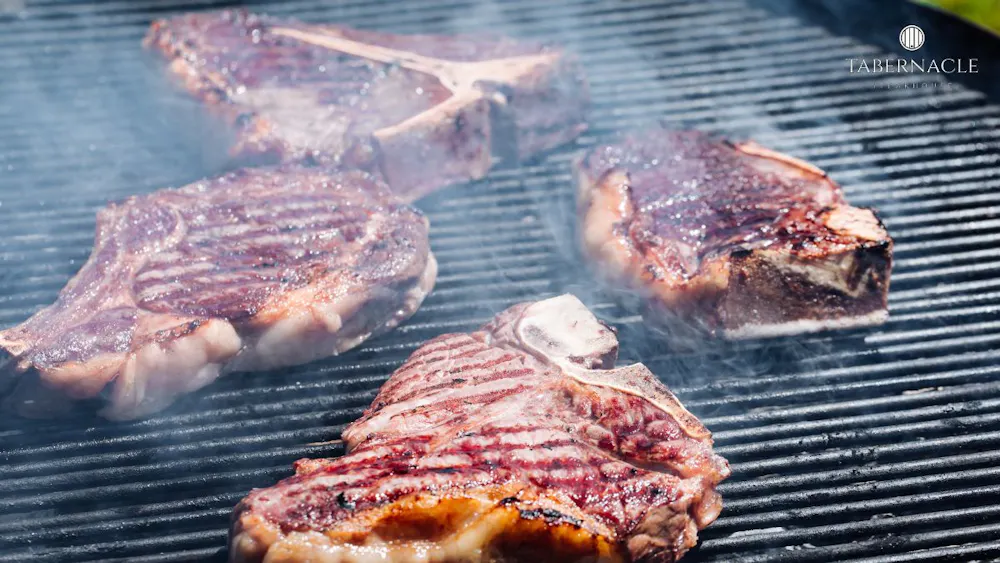
Marbling is the fat distributed through the lean portion of beef.
It helps shape juiciness, tenderness, richness, and the way the steak feels as you eat it. Marbling also plays an important role in how USDA beef quality grades are assigned.
Wagyu is famous for taking marbling in a particularly rich direction.
More marbling can give Wagyu a softer bite and a richer feel on the palate. For some diners, a smaller Wagyu steak feels satisfying because every bite carries more fat and intensity.
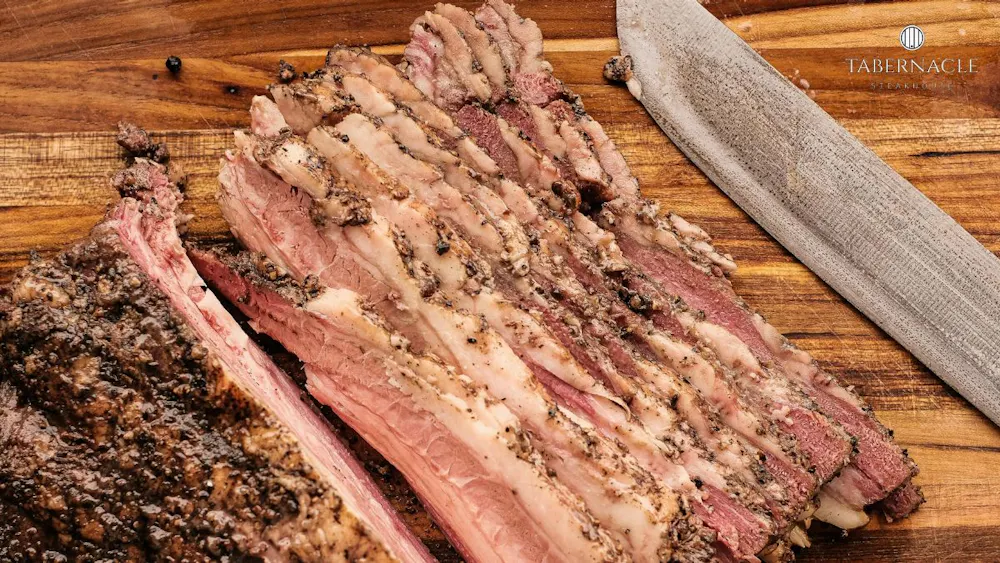
A classic dry-aged steak gives you a different pleasure. You may get a firmer steakhouse bite, stronger beef character, and the deeper flavor that develops during aging.
The better choice depends on the kind of steak you want that night.
One might fit a long date-night dinner. The other might be exactly what you want when you are hungry for a substantial ribeye.
WHERE DOES DRY AGING FIT INTO THE CHOICE?
Dry aging adds another layer that has nothing to do with whether the steak is Wagyu or Prime.
During dry aging, beef rests under controlled conditions while moisture loss and natural enzymatic changes affect flavor and texture. Our 45-day dry-aged steak guide goes deeper into what that process does to a ribeye.
Every steak in the From the Grill section spends 45 days dry-aging in-house.
So the choice involves more than Wagyu versus a familiar steakhouse cut.
You are choosing among cuts that can combine different genetics, marbling levels, sizes, and the character created by 45 days of aging.
For someone who loves a deeper steakhouse flavor, that aging process can matter just as much as the label beside the cut.
WHICH STEAK FITS THE DINNER YOU WANT?
Start with appetite.
If you are choosing Wagyu for the first time, our Wagyu steak guide compares the cuts by appetite and table size. The 10 oz Wagyu Strip gives you a more contained entrée.
If you want something fuller, the 16 oz Wagyu Delmonico increases both the size and the sense of indulgence.
The 48 oz Wagyu Tomahawk changes the experience completely. This is the kind of cut that puts sharing at the center of dinner.
On the Angus side, the grill includes a 12 oz Ribeye, 16 oz Bone-In Ribeye, and 22 oz Signature Cowboy.
Think about the table as much as the steak.
| If You Want | Consider |
|---|---|
| A First Wagyu Entrée | 10 oz Wagyu Strip |
| A Richer Individual Steak | 16 oz Wagyu Delmonico |
| A Steak to Share | 48 oz Wagyu Tomahawk |
| A Classic Ribeye Dinner | 12 oz Angus Ribeye |
| More Steak With the Bone-In Experience | 16 oz Angus Bone-In Ribeye |
| A Larger Steakhouse Plate | 22 oz Signature Cowboy |
| A Side-by-Side Beef Experience | Carnivore Board |
Want Prime dry-aged beef and American Wagyu at the same table? The Carnivore Board brings together a chef’s selection of both, served with signature sauces and seasonal garnishes.
Since the chef selects the cuts, ask what is on the board when you dine.
WHAT DOES KOSHER PREPARATION CHANGE ABOUT STEAK CHOICES?
Kosher beef follows preparation requirements before it reaches the grill. If the broader standards are new to you, our Glatt Kosher dining guide explains how supervision, meat preparation, dairy, and wine fit into the restaurant experience.
One important process is nikkur, which removes prohibited fats, blood vessels, and the sciatic nerve where applicable. The hindquarters require particularly detailed nikkur, and the practice of not using hindquarter meat remains common in many kosher communities.
Koshering meat also involves removing blood through an approved process such as salting.
For diners, those requirements can lead to a steak selection that looks different from a non-kosher steakhouse menu.
Cuts from the rib and forequarter become especially important, which helps explain why ribeye, short rib, and related preparations have such a strong presence in kosher beef cooking.
Kosher preparation helps shape which cuts reach the kitchen, while aging and cooking shape the experience on the plate.
IS WAGYU ALWAYS THE RICHEST CHOICE?
Wagyu has a reputation for heavy marbling for good reason, but one label cannot tell you everything about the steak on your plate.
Cut, portion size, aging, preparation, and your own appetite all affect how rich a steak feels.
- Someone who loves a very rich bite may head straight toward Wagyu.
- Another diner may enjoy the structure and beef-forward character of a dry-aged Angus ribeye more.
- If two people at the table want different experiences, order accordingly instead of forcing one steak to satisfy everyone.
Ordering two different cuts also gives the table a chance to compare richness, texture, and dry-aged flavor bite by bite.
IS A BIGGER STEAK ALWAYS BETTER FOR SHARING?
Not necessarily.
A 48 oz Tomahawk naturally makes sense for sharing because of its size, but sharing can also mean ordering different cuts and tasting across the table.
- One person could order a Wagyu Strip while another chooses a dry-aged Angus Ribeye.
- Add a few sides, and the meal starts to feel like a steak tasting without turning dinner into a formal tasting menu.
- For a larger group, the Carnivore Board gives the table another way to explore different beef styles in one order.
The best approach depends on how hungry everyone is and whether steak is the whole event or part of a longer dinner with starters, wine, sides, and dessert.
WHAT SHOULD YOU ORDER WITH WAGYU OR DRY-AGED STEAK?
Rich steak benefits from contrast.
Wild Mushrooms can stay in the same savory direction.
- Charred Green Beans or Charred Miso Broccolini bring vegetables to the table.
- Hand Cut Fries give you the familiar steakhouse pairing.
- Roasted Garlic Mashed Potatoes work when the table wants something softer and comforting.
Wine can change the experience again.
- A structured red can stand up to marbling and dry-aged flavor.
- The right bottle for a mixed table may need enough flexibility to work across more than one cut.
- Our kosher wine pairing guide matches wine styles with Ribeye, Cowboy, Wagyu Strip, Delmonico, and Tomahawk.
If you plan to start with sushi or another first course, think about the entire meal instead of choosing sides and wine around steak alone.
FAQS ABOUT WAGYU VS PRIME KOSHER STEAK
IS WAGYU THE SAME AS USDA PRIME?
No. Wagyu refers to cattle genetics, while USDA Prime is a quality grade. Wagyu beef can also qualify for USDA Prime if it meets the grading requirements.
DOES USDA PRIME ALWAYS HAVE MORE MARBLING THAN WAGYU?
Not automatically. Prime has specific USDA marbling requirements, but Wagyu can develop very high levels of intramuscular fat. The exact amount depends on the animal, genetics, production, grading system, and individual cut.
IS EVERY ANGUS STEAK AT TABERNACLE USDA PRIME?
The Angus Ribeye, Bone-In Ribeye, and Signature Cowboy are listed as Angus cuts rather than individually as USDA Prime. Prime appears specifically on the Carnivore Board, which pairs Prime dry-aged beef with American Wagyu.
CHOOSE THE STEAK THAT FITS YOUR APPETITE
The better steak is the one that gives you the experience you came for.
Choose Wagyu when you want to lean into marbling and richness. Reach for a dry-aged Angus cut when you want that classic steakhouse bite with 45 days of aging behind it. Bring a Tomahawk or Carnivore Board into the picture when dinner belongs in the middle of the table.
At our Midtown Manhattan location at 315 W 36th St, you can make the comparison at the table instead of trying to settle it from a menu description.