What Does Glatt Kosher Mean? A First-Time NYC Dining Guide

KEY POINTS:
- Glatt technically describes the condition of an animal's lungs after kosher slaughter and inspection.
- At an OU-supervised kosher meat restaurant, the dining experience also follows broader kosher rules involving ingredients, preparation, equipment, meat, dairy, and wine.
- First-time diners can still expect the rhythm of a Manhattan steakhouse dinner, from sushi and steak to wine and dessert.
Seeing Glatt Kosher on a Manhattan restaurant can raise a few questions if you have never eaten at a kosher steakhouse before.
Does glatt describe the whole restaurant? Why is there no dairy with steak? What happens with wine? And if you do not keep kosher yourself, does anything change about the way you order?
It makes more sense once you separate what “glatt” means from the broader rules of a kosher restaurant.
At Tabernacle Steakhouse, we operate under the rabbinical supervision of the Orthodox Union and are Glatt Kosher. The practical experience still feels like dinner out in Midtown: choose a first course, order your steak or another entrée, pour some wine, and leave room for dessert.
WHAT DOES GLATT KOSHER ACTUALLY MEAN?
Start with the word itself.
Glatt means “smooth.” In its technical kosher meaning, it refers to the lungs of certain kosher-slaughtered animals. Inspectors examine the lungs for adhesions or other issues that could affect the animal's kosher status. An animal that meets the applicable glatt standard qualifies as glatt.
This distinction matters because people sometimes use “Glatt Kosher” as if it simply means “more kosher.”
The technical meaning is narrower. Glatt deals with a particular aspect of meat inspection. It does not technically describe fish, chicken, vegetables, or dessert. Over time, though, the phrase has also become a familiar way to describe restaurants and food businesses that serve glatt meat within a broader kosher-supervision program.
So when a Manhattan steakhouse says it is Glatt Kosher, think of two parts: the glatt status of the applicable meat and the broader kosher standards followed throughout the restaurant.
WHAT DOES OU SUPERVISION MEAN FOR DINNER?
Glatt tells you something specific about meat. OU supervision tells you more about how the restaurant handles kosher food beyond the meat itself.
Kosher certification covers more than checking the final dish. The Orthodox Union describes kosher supervision as involving ingredients, preparation, processing, handling, equipment, and facilities.
For a diner, most of that work happens out of sight.
You can sit down and order without having to investigate every ingredient yourself. If you keep kosher and have questions about a particular standard or preparation, asking the restaurant or your own rabbinic authority before dining can still help with anything specific to your practice.
For someone joining observant friends, family, or colleagues, the certification also answers an important question before everyone reaches the table: the restaurant follows one clearly identified kosher-supervision standard.
HOW DOES A KOSHER MEAT STEAKHOUSE CHANGE FAMILIAR DISHES?
A kosher steakhouse still has steaks, sauces, sushi, sides, cocktails, and dessert. Some familiar steakhouse ideas simply take a different form.
| Familiar Steakhouse Expectation | At a Kosher Meat Restaurant |
|---|---|
| Steak finished with dairy butter | Steak is prepared without dairy |
| Dairy cream or cheese with meat | Sauces and accompaniments use kosher meat-compatible ingredients |
| Lobster or other shellfish starters | Sushi, kosher fish, tartare, and other starters fill that part of the menu |
| Bacon or pork garnish | Beef, poultry, or other kosher ingredients may create savory alternatives |
| Dairy dessert after steak | Dessert follows the restaurant's kosher meat-service requirements |
A familiar dish name does not always tell you which ingredients are actually on the plate.
A modern kosher menu can use culinary terms that sound familiar while adapting the preparation to kosher requirements. If you have an allergy, intolerance, or another dietary concern, ask the server about the actual ingredients rather than treating “kosher” as an allergy label.
WHAT CAN YOU ORDER AT A GLATT KOSHER STEAKHOUSE IN NYC?
Dinner can begin with sushi, Tuna Tartare, Crispy Rice, or other starters from our dinner menu before moving into beef, fish, poultry, or lamb.
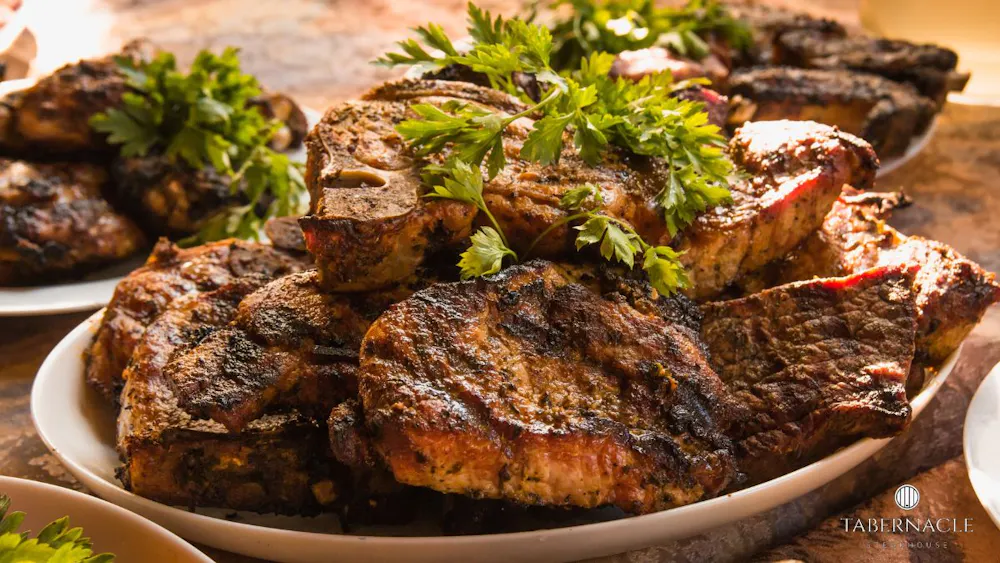
On the grill, our 45-day dry-aged steaks include Angus Ribeye, Bone-In Ribeye, and the Signature Cowboy. If you prefer richer marbling, our Wagyu steak guide explains the Strip, Delmonico, and 48 oz Tomahawk in more detail.
Someone who would rather skip steak can choose from dishes such as Mediterranean Whole Grilled Branzino, Seared Ora King Salmon, Cast Iron Chicken, Whole Roasted Dry Aged Duck, Chilean Sea Bass, or Mediterranean Rack of Lamb.
The range works especially well when everyone at the table wants something different.
One person can settle into a dry-aged ribeye while another orders fish. The table can share sushi first, add vegetables or potatoes on the side, and finish the meal together without everyone ordering the same kind of entrée.
Kosher dining changes certain ingredients and preparation rules. It does not require every plate to look alike.

WHY DON'T MEAT AND DAIRY APPEAR TOGETHER?
Jewish dietary law separates meat and dairy.
At an OU-supervised kosher meat restaurant, that means dairy ingredients are not combined with meat service in the way you might see at a conventional steakhouse. You will not find a cheeseburger or dairy butter added to a steak.
This is also why first-time diners should not read a familiar-sounding menu word and immediately assume it means the dairy version they know from another restaurant.
Instead, the kitchen builds each dish around ingredients and preparations that fit the restaurant's kosher standards.
From a dining perspective, the result can be interesting rather than limiting. Chefs can build richness and contrast with ingredients such as roasted garlic, mushrooms, miso, herbs, citrus, wine, beef tallow, vegetables, and other preparations that fit the restaurant's kosher standards.
WHAT IS MEVUSHAL WINE?
Wine introduces another term you may see at a kosher restaurant: mevushal.
The word refers to kosher wine that has undergone a qualifying heat process. Under kosher law, mevushal wine has different handling rules from non-mevushal wine, including who may pour or handle an opened bottle.
For the diner, there is little ceremony involved.
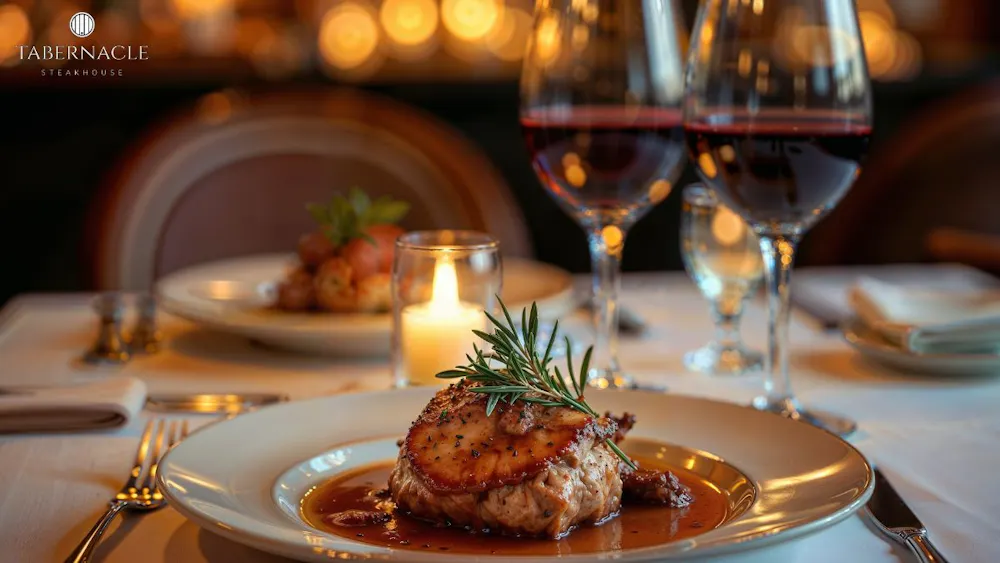
Order wine as part of the meal and let the restaurant handle the service requirements. If you want a bottle to match a ribeye or Wagyu, our kosher wine pairing guide can help you compare styles before you order.
Our wine selection includes curated mevushal options for the table.
WHAT IF SOME GUESTS KEEP KOSHER AND OTHERS DON'T?
This is where a supervised kosher restaurant can make group planning considerably easier.
Kosher-observant guests can order from the same supervised menu as everyone else, which makes dinners with mixed groups much easier to plan.
Non-Jewish guests can dine at a Glatt Kosher restaurant as well. Kosher rules govern the food and its preparation. They are not an entry requirement for the person sitting at the table.
For a client dinner, family celebration, date, or meal with friends, everyone can focus on choosing what sounds good rather than dividing the table by dietary practice.
Planning for a larger group? Our private event spaces accommodate gatherings from 4 to 150 guests.
WHAT SHOULD FIRST-TIME GUESTS KNOW BEFORE THEY ARRIVE?
Very little needs to change about the way you normally enjoy dinner.
Look through the menu if you like planning your order in advance. Ask the server when a kosher term, wine, or preparation is unfamiliar. If you follow a specific level of observance beyond the restaurant's stated OU supervision, confirm anything important to you before the meal.
One practical difference is outside food and drink. Bringing food into a kosher-supervised restaurant can create certification issues, so check with the restaurant rather than arriving with something from another kitchen.
From there, enjoy the evening the same way you would any great steakhouse dinner. Our guide to kosher fine dining in Manhattan goes deeper into what the full experience can look like.
Choose a first round. Decide whether tonight calls for dry-aged Angus, Wagyu, fish, or something else. Pick a bottle. Share sides. Argue gently over whether everyone still has room for dessert.
FAQS ABOUT GLATT KOSHER DINING IN NYC
DOES GLATT KOSHER MEAN EVERYTHING ON THE MENU IS GLATT?
Not technically. Glatt specifically refers to a standard involving the lungs of applicable kosher animals. Fish, vegetables, chicken, and other foods are not technically “glatt” in that sense. A restaurant may still describe itself as Glatt Kosher because it serves glatt meat within a supervised kosher operation.
CAN SOMEONE WHO DOES NOT KEEP KOSHER EAT AT A GLATT KOSHER RESTAURANT?
Yes. The kosher requirements apply to the food, ingredients, preparation, equipment, and supervision rather than requiring diners to be Jewish or personally kosher-observant.
DOES A GLATT KOSHER STEAKHOUSE SERVE DAIRY WITH MEAT?
A kosher meat restaurant does not combine dairy with its meat service. Familiar steakhouse dishes therefore use preparations that fit the restaurant's kosher status rather than dairy butter, cream, or cheese with meat.
MAKE YOUR FIRST GLATT KOSHER DINNER ABOUT THE FOOD
Once the terminology makes sense, the labels stop being the focus.
Dinner can start with sushi, move into a 45-day dry-aged steak or Wagyu, and stretch into wine and dessert. The kosher standards shape how the kitchen gets there, while the table still gets to enjoy the part that matters most during a night out: good food and good company.
For a first Glatt Kosher dinner in Midtown Manhattan, join us at 315 W 36th St near Penn Station, Madison Square Garden, Hudson Yards, and Times Square.