What Does 45 Days of Dry Aging Do to a Ribeye?

- Dry aging changes beef through moisture loss, natural enzyme activity, and time in a controlled environment.
- At Tabernacle, we dry-age our steaks in-house for 45 days before they reach the grill.
- The result is a more concentrated steak flavor and a texture that feels different from a fresh or wet-aged cut.
A 45-day dry-aged steak starts changing long before it reaches the grill. As the beef rests in a controlled environment, moisture slowly leaves the meat and natural enzymes begin changing its texture.
At Tabernacle, we dry-age our steaks in-house for 45 days. When you order our Angus Ribeye, that aging time is already part of the experience before the first slice hits the plate. Our current dinner menu lists a 12 oz Angus Ribeye along with other 45-day dry-aged cuts.
The science explains what happens. The plate shows you what those 45 days add to the experience.
What Happens During 45 Days of Dry Aging?
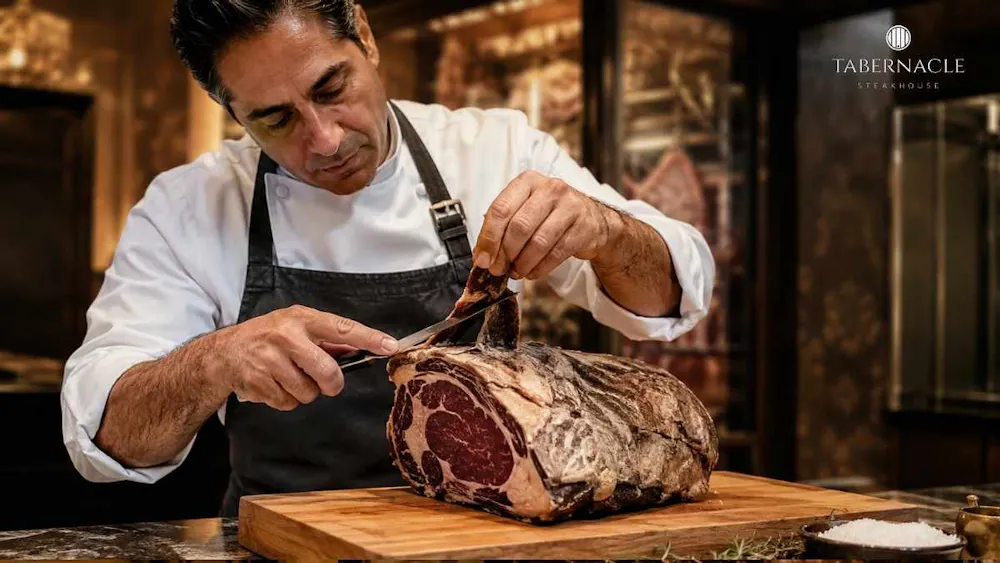
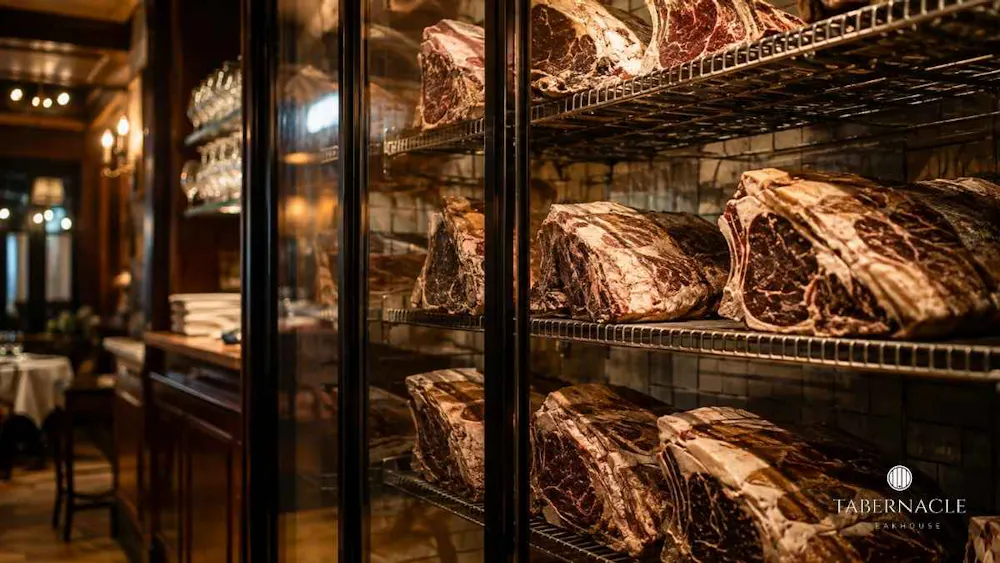
Dry aging happens in a controlled refrigerated environment where temperature, humidity, airflow, and time all need to be managed carefully. Research reviews identify those four conditions as core parts of the process.
The beef rests without sealed packaging. Air can move around the meat while the aging room stays cold and controlled.
Moisture slowly leaves the surface. That moisture loss reduces the final weight and helps concentrate flavor compounds inside the beef.
Natural enzymes continue working inside the meat. Those enzymes break down proteins during aging and contribute to changes in tenderness and flavor.
The dried exterior is trimmed before cooking. The part served to you is the aged interior after the dry outer surface has been removed.
What 45 Days Changes Inside a Kosher Ribeye
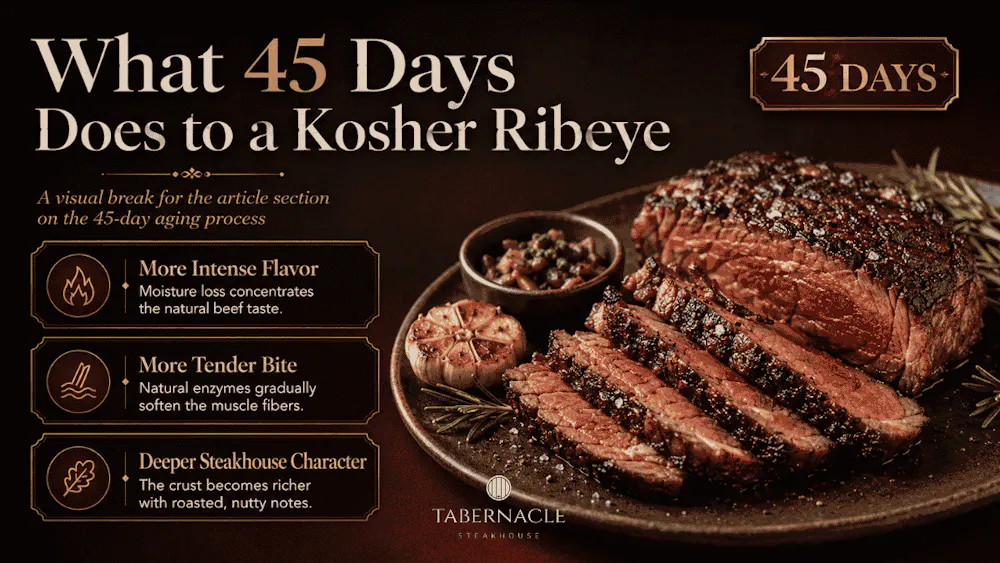
How Does Moisture Loss Change the Flavor?
Some of the beef's moisture is lost during dry aging, which is one reason the finished cut weighs less than it did at the start.
That loss also concentrates flavor compounds in the remaining meat. Research on dry-aged beef links moisture evaporation with higher concentrations of several taste-active compounds.
At the table, that can translate into a beefier, more concentrated flavor than you would expect from a steak that has not gone through the same process.
Enzymes Help Soften the Bite
Natural enzymes keep working inside the beef as it ages. Those enzymes break down proteins and muscle structures over time, which can contribute to a more tender texture.
The change is part of what separates a dry-aged ribeye from a steak cooked shortly after processing. You still get the structure of the cut, but the aging process has had time to work before the meat reaches our grill.
What Does a 45-Day Dry-Aged Steak Taste Like?
Dry-aged steak is often described as beefier, roasted, nutty, and sometimes slightly funky. The exact flavor depends on the cut, aging conditions, and the diner's own palate.
Research has found that dry aging changes concentrations of free amino acids and other taste-active compounds as moisture evaporates and proteins break down.
Our 45-day ribeye gives you enough time to notice that dry-aged character while still keeping the richness people expect from ribeye. The first bite should still feel like steak. It simply has more going on.
What Is the Difference Between Dry-Aged and Wet-Aged Steak?
How does this compare to standard steaks? Choosing a dry aged vs wet aged steak comes down to how the meat is stored.
Wet-aged beef stays sealed in airtight packaging while it ages. Dry-aged beef rests exposed to controlled air in a refrigerated environment. Because dry aging allows moisture loss and requires exterior trimming, less saleable meat remains at the end of the process. That is one reason dry-aged cuts usually cost more.
| Aging Method | How It Rests | Typical Result | Why Cost Changes |
|---|---|---|---|
| Fresh | Minimal extended aging | Familiar beef flavor | Less aging time |
| Wet aged | Sealed packaging | Juicier, milder aging character | Less moisture and trim loss |
| Dry aged | Controlled air exposure | More concentrated dry-aged flavor | Storage, moisture loss, trimming |
At Tabernacle, our current dinner menu lets you compare several 45-day dry-aged cuts before you visit, including Angus Ribeye, Bone-In Ribeye, and Signature Cowboy.
Why Does Ribeye Work Well With Dry Aging?
Ribeye already brings plenty of marbling and richness to the plate, so it gives the dry-aging process a strong base to work with.
The ribeye also gives you more than one texture in a single cut. The eye and the surrounding cap carry different levels of fat and tenderness, which makes each slice feel a little different.
At Tabernacle, our 12 oz Angus Ribeye is dry-aged in-house for 45 days before it reaches the grill. That makes it a straightforward place to start if you want to taste what our aging program actually does without ordering one of the larger cuts.
How Does Dry Aging Fit Into Our Kosher Steakhouse Menu?
Our dry-aged steak program sits inside an OU Glatt Kosher kitchen, so the aging process is one part of a broader kosher dining experience.
Steak is only one direction the table can take. Our dinner menu also includes Wagyu cuts, sushi, fish, chicken, lamb, sides, and other dishes, which means one guest can order a dry-aged ribeye while the rest of the table builds a completely different meal.
Our Midtown location also puts that dinner close to Penn Station, Madison Square Garden, Hudson Yards, and Times Square.
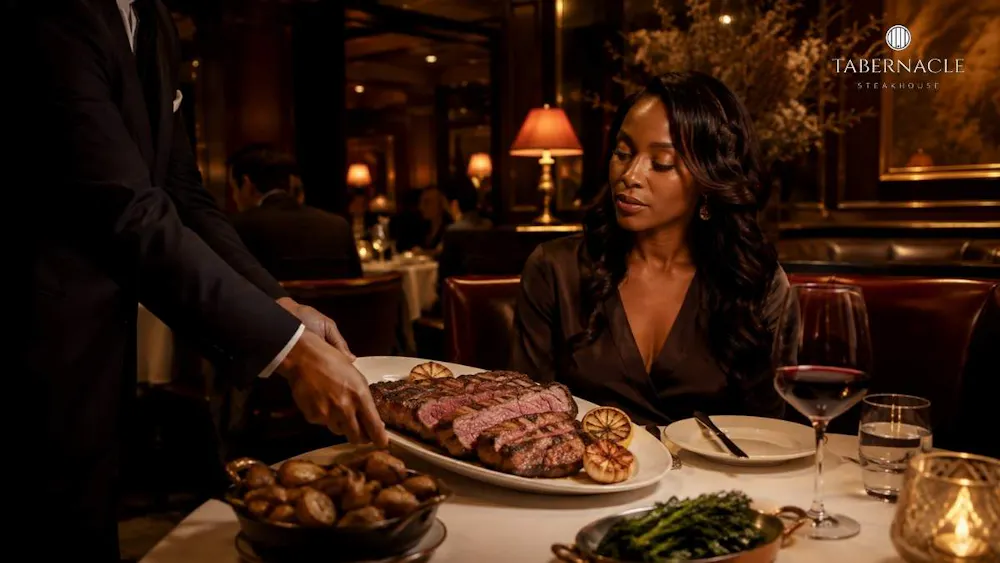
How Should You Order Your First Dry-Aged Steak at Tabernacle?
Our 12 oz Angus Ribeye is an easy place to start when you want the dry-aged character without committing to one of the larger steaks.
A bigger appetite can lead you toward the 16 oz Bone-In Ribeye or 22 oz Signature Cowboy. Our Wagyu section also gives you another direction if you want to compare dry-aged Angus with a richer cut. Our Wagyu vs. Prime steak guide breaks down those choices before you order.
A simple side can keep the steak at the center of the plate. Our current menu includes roasted garlic mashed potatoes, wild mushrooms, charred green beans, broccolini, and hand-cut fries.
Our team can also help you choose the cut that fits your appetite when you sit down, and our kosher wine pairing guide can give you a head start if you want a bottle with your steak.
- A ribeye gives you a familiar cut with clear dry-aged character.
- Dry aging changes flavor and texture, but every cut still tastes different.
- A larger steak can work well for sharing if the table wants to compare bites.
- Our menu lists the aging time clearly, so you know what you are ordering before it arrives.
FAQs About 45-Day Dry-Aged Steak The science explains what happens. The plate shows you why people keep ordering it
Not simply because it is dry-aged. The term describes how the beef is aged, not how the cooked center should feel. Moisture leaves the meat during aging and the dried exterior is trimmed away before cooking. Final juiciness still depends on the cut and preparation.
Flavor preference is personal, but a ribeye can be a familiar place to start because the cut already has plenty of richness. Our 45-day aging gives it a clear dry-aged character without changing the fact that you are still eating a ribeye.
Dry aging takes time and refrigerated storage, while moisture loss and exterior trimming reduce the amount of meat left to sell. Research reviews cite shrinkage, trimming loss, storage conditions, and handling as major cost factors.
Reading about dry aging can tell you what happens over 45 days. Sitting down with the ribeye lets you taste what that time actually does.
At Tabernacle, we dry-age our steaks in-house for 45 days and serve them from our Midtown Manhattan kitchen under OU Glatt Kosher supervision. Start with the Angus Ribeye, choose a larger cut for the table, or ask our team which steak fits the dinner you have in mind.
RESERVE YOUR TABLE